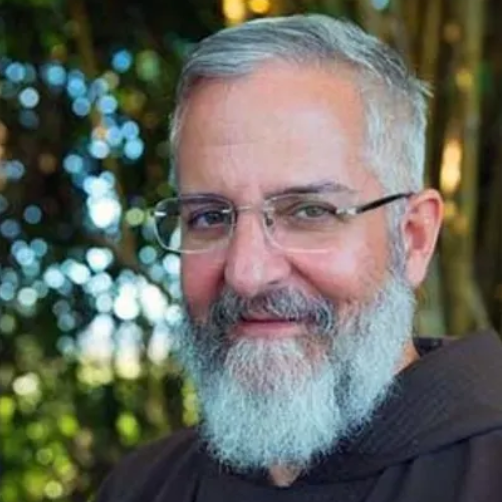
Born of a Woman
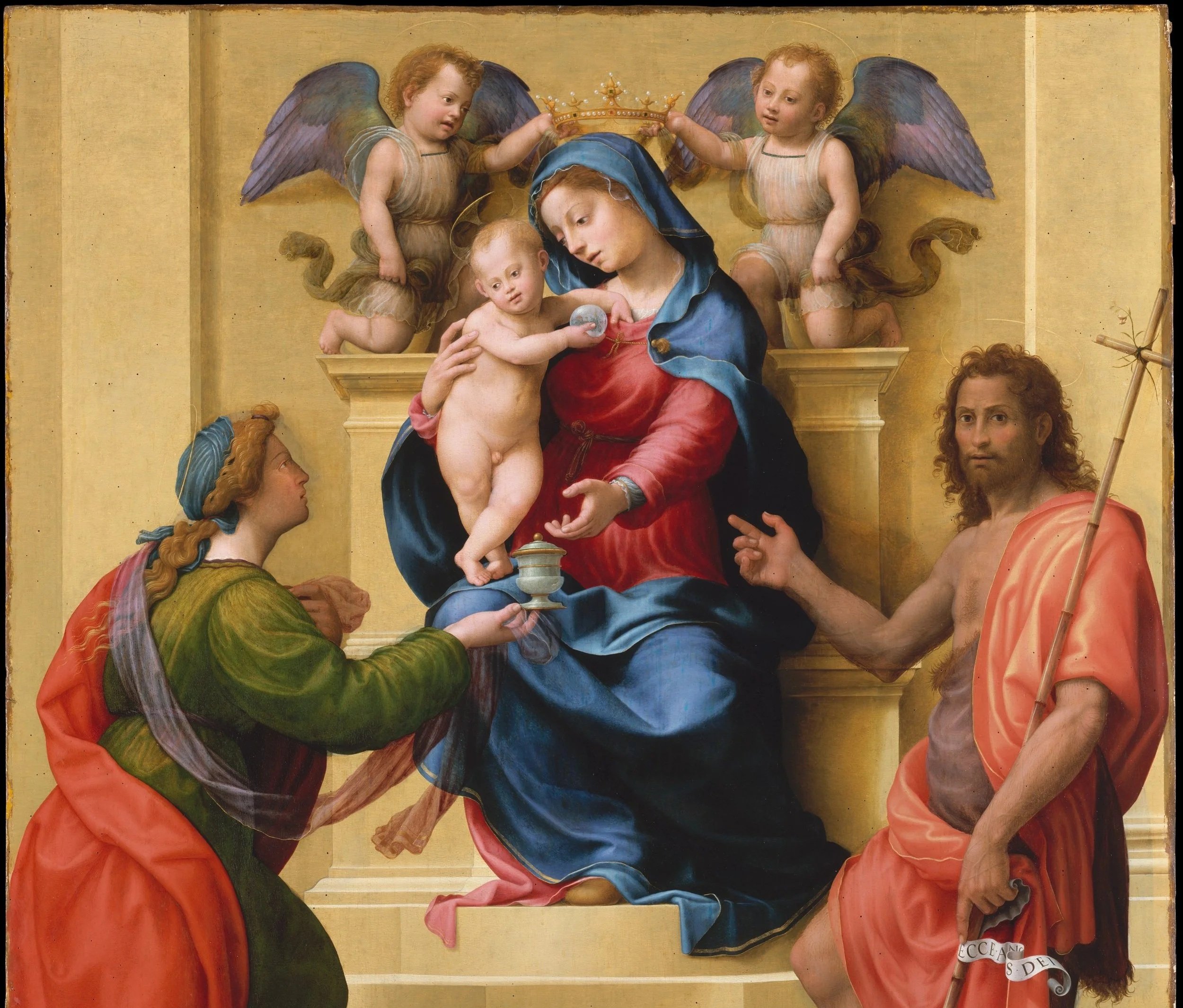
Madonna and Child Enthroned with Saints Mary Magdalen and John the Baptist
Giuliano di Piero di Simone Bugiardini
A homily by Fr. Joseph Tuscan for Jan 1, 2026

The Holy Family Adored by Angels (The Large Nativity)
Bartolomeo Biscaino
The Church begins the new year by broadening the Christmas spotlight.
Our eyes are gently redirected—not away from Christ, but more deeply into
the mystery of His coming—by fixing our gaze upon Mary, the Holy Mother
of God.
Christmas reveals that God has come among us. Today’s feast helps us
understand how He chose to come. Mary has an essential and
irreplaceable role in the Incarnation of the Second Person of the Blessed
Trinity.
Recently, the Vatican offered a clarification regarding its concern over
certain Marian titles—especially “Co-redemptrix” and “Mediatrix of all
grace.” It is important to note what the Church did not say. These titles are
not condemned, not forbidden, and not rejected as erroneous. They remain
part of the Church’s theological tradition and have a long history in popular
devotion and serious theological reflection.
What the Vatican emphasized is context and clarity. The concern is
pastoral and doctrinal: when these titles are used without explanation, they
can be misunderstood, as if Mary were being placed on the same level as
Christ, the one and only Redeemer. The Church therefore prefers to avoid
these expressions in official magisterial documents, not because they are
false, but because they require careful explanation to preserve the truth
that Jesus Christ alone is Redeemer in the strict sense.
When theologians or the faithful speak of Mary as co-redemptrix, the word
“co” does not mean equal, but with or in cooperation with. Mary’s role is
entirely dependent, subordinate, and participatory—flowing from Christ’s
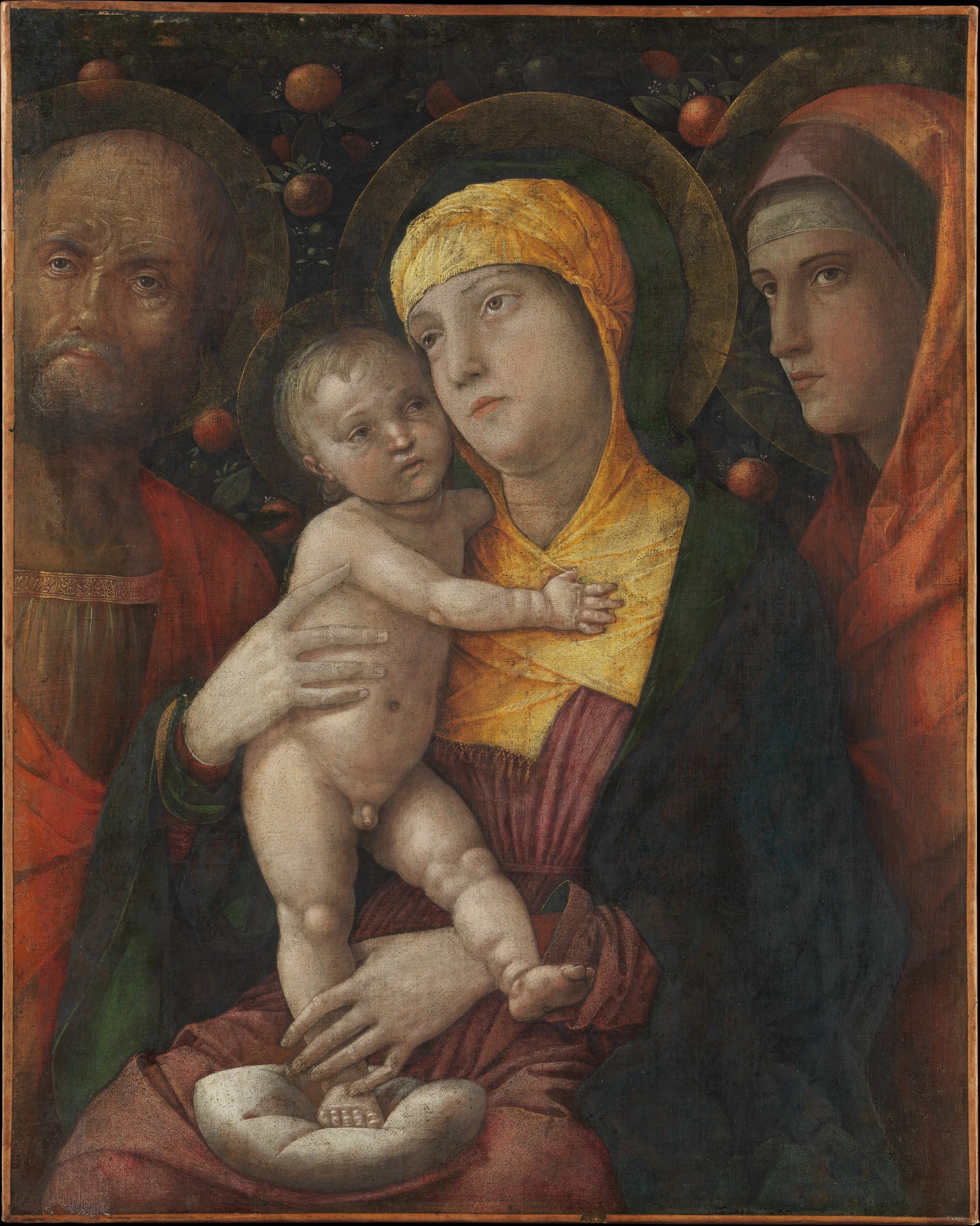
Holy Family with St Mary Magdalene
Andrea Mantegna
unique saving work, never adding to it, never competing with it.
Similarly, to call Mary “Mediatrix of all Grace” does not mean she replaces
Christ, the one Mediator between God and humanity. Rather, it expresses
the belief that all grace comes from Christ through His Body, and that Mary,
as Mother of the Redeemer and Mother of the Church, has a singular
maternal role in God’s plan of grace.
In short, the Church allows these titles in sermons, popular piety,
theological discussion, and devotional language, while exercising prudence
in official usage—so that Marian devotion always leads clearly, safely, and
unmistakably to Christ, never away from Him.
As the Church has always taught: Everything Mary is, she is because of
Christ—and for Christ.
God did not enter history by force or spectacle. He came by invitation—an
invitation conveyed through an angel, received in faith, and answered with
a free and loving yes. At the Annunciation, Mary consents to God’s plan:
“Let it be done to me according to your word” (Lk 1:38).
This consent is not passive resignation. It is courageous cooperation.
Through her faith, eternity enters time. Through her body, the Word
becomes flesh.
Elizabeth immediately perceives the astonishing dignity of this moment.
Filled with the Holy Spirit, she cries out:
“Most blessed are you among women, and blessed is the fruit of your
womb. And how does this happen to me, that the mother of my Lord should
come to me?” (Lk 1:42–43).
Elizabeth gives voice to what the Church would later proclaim with
precision: Mary is truly the Mother of God—not because she precedes
God, but because the one she carries is truly God.
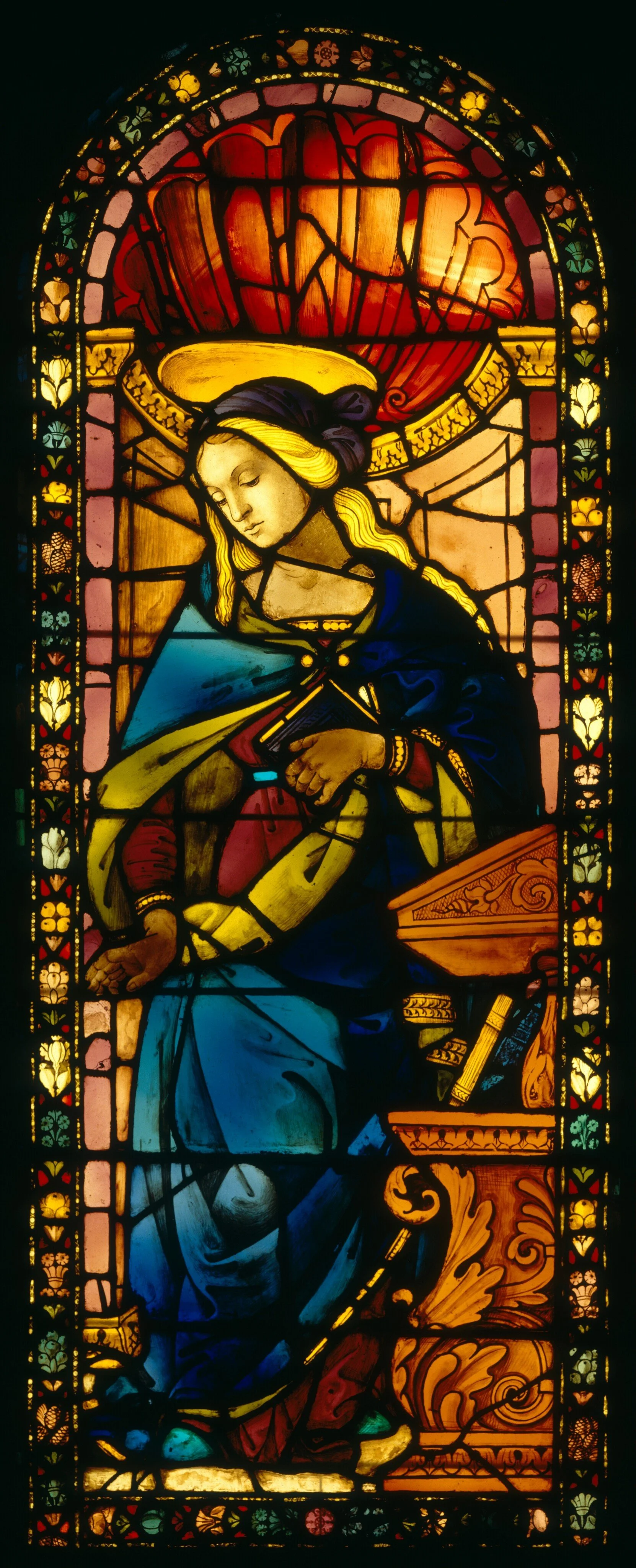
The Virgin Annunciate
Mary’s divine motherhood places her in a unique position within God’s
redemptive plan. She is not merely a background figure in salvation history.
She stands at its very threshold, holding the key moment when God
becomes man.
Saint Paul, writing to the Galatians, speaks of this mystery with striking
simplicity. Without even naming Mary, he declares:
“When the fullness of time had come, God sent his Son,
born of a woman, born under the law” (Gal 4:4).
That brief phrase—born of a woman—contains the whole drama of the
Incarnation. God does not bypass humanity; He enters it fully. He submits
Himself to human growth, human vulnerability, and human dependence.
Paul then adds something even more profound:
“God sent the Spirit of his Son into our hearts, crying out, ‘Abba, Father!’” (Gal. 4:6).
Here we glimpse the widening horizon of Mary’s motherhood. If the Spirit of
her Son dwells in us, then we are no longer strangers but children. And if
we are children of the Son, then Mary—by grace—becomes mother to all
His brothers and sisters.
Her motherhood is not confined to Bethlehem. It extends to the Church.
Some theologians go even further, reflecting on Mary’s place within God’s
eternal plan. They remind us that God’s first thought in creation was
Christ—the incarnate Word, the one who could give perfect love and
worship to the Father on behalf of all creation.
And if Christ was first in God’s intention, then Mary was second—not as an
afterthought, but as the woman chosen from all eternity to give Him flesh.
Her motherhood is therefore not accidental. It is woven into the very logic of
creation and redemption.
The Church’s precise title “Mother of God” reaches back at least to the third
or fourth century. In Greek, Theotokos—“God-bearer”—it became the
touchstone of authentic faith in the Incarnation.
At the Council of Ephesus in the year 431, the Church solemnly affirmed
that the Virgin Mary is rightly called Theotokos. This was not primarily
about Mary; it was about Christ. To deny her this title would risk dividing
Christ—suggesting He was somehow less than fully God from the first
moment of His human existence.
When the council’s decision was announced, history tells us that crowds
poured into the streets shouting:
“Praised be the Theotokos!”
That cry of faith has never fallen silent. Centuries later, the Second Vatican
Council would echo the same truth. In its Dogmatic Constitution on the
Church, Mary is called Mother of God again and again—affirming that
devotion to Mary always safeguards the truth about her Son.
Mary does not draw attention to herself. Like in today’s Gospel, she stands
quietly beside the Child, pondering the mystery entrusted to her. She
teaches us that the way into the new year is not anxiety, control, or
noise—but trust, receptivity, and faith.
As the shepherds depart glorifying God, Mary remains. She holds the
Child. She keeps the Word. She reflects. May she teach us to begin this
year as she began her motherhood:
by welcoming Christ,
by trusting God’s plan,
and by allowing the Spirit of the Son to cry out within us: Abba, Father.
Saint Anthony of Padua:
O Mary,
you are a throne
in which is located the glory of the Father.
On this throne Jesus Christ, true Wisdom,
took his place,
Glory Itself, greater than any of the angels,
who lived on earth in our flesh.
You, blessed Mary,
became the seat of that Glory, Jesus Christ,
to whom be honor and praise from age to age. Amen.
O Mary, conceived without sin, pray for us who have recourse to thee.